

I have to admit I am a bit lazy in writing this report on the forum. Right after the closing of the forum, I brought family for a short trip in Thailand, and then headed back for China for the Chinese Spring Festival, till today when I was able to shift gear into working mode.
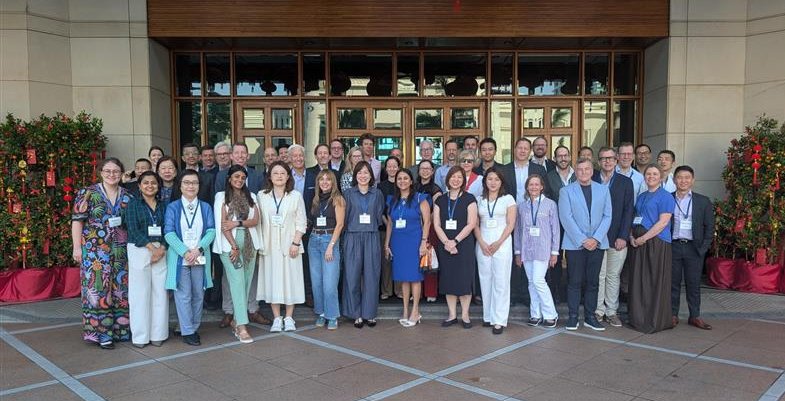
It is my first time to participate in this Cambridge Forum for Asia Pacific Wealth Advisors, and the Bangkok forum attracted some 45+ lawyers and other professionals in the international estate planning industry to talk, share and exchange ideas on serving clients in Asian Pacific area. I am particularly interested and euthusiastic about the way Cambridge Forum conducts its forum and discussions, whereby all participants will sit around a square table, so everybody can see and hear and interact with each other, distinctly different from traditional conference where a speaker or a panel will be staged addressing audience at a distance.
Again, it is a bit surprising to see only two lawyers from China mainland, including myself. This disproportion of the number of Chinese professionals in this industry against the size and magnitude of the wealth industry in China mainland is striking. Apparently there should be more participants from China mainland to the forum so as to learn from our peers to better serve Chinese clients whose assets span across different jurisdictions. To some extent, it is the Chinese high net worth individuals who have grown and boosted this industry in Asia pacific area.
The Bangkok forum covered the following topics in the two day sessions:
1. brief introductions from representatives of each jurisdictions on the developments of industrial regulatory and legal landscape. This is a routine and necessary section of each Cambridge Forum;
From the perspective of China mainland, it is notable that China trust companies have started to roll out tradtional trust business where real estates in major Chinese cities like Shanghai and Beijing are now able to be settled into a family trust, which is not possible in the past. The progress stemmed from the new regulation from China trust business regulator, a pivot program tested in some cities before nationwide rollout in the near future.
2. the next session is about succession and legacy, a traditional line of business for inheritance and estate law practitioners. This touches on the implications of much longer lifespan and declining populations in major economy like China, and the concept of "die with zero", i.e. people looking to pass only a specified percentage of their wealth to heirs and aiming to spend down or donate to charity the balance;
3. the wisdom across generations: how advisory excellence adapts to changing times. Here, we discussed the art of serving clients across different generations and cultural backgrounds, sharing insights on what has remained constant and what has fundamentally changed. The newly developped AI was also talked about in terms of its implications in professional work for clients.
4. One of best topics attracts a lot of attention and interests is: asset protection and trust from matrimonial, creditor and regulatory perspective. Family trusts of various kinds are widely used in common law world in Asia Pacific area like Hong Kong, Singapore and Australia. Often estate planning always involves and employs trust structure for certain purpose, and it is important to examine trust structure and arrangement can stand the test and challenge from spouses, third party creditors and often government regulators as well. A few typical cases were closely examined to understand settlors' power to control the trust properties and the limit of such control, to avoid trusts being disregarded.
5. Participants also updated developments and shifts in contentious litigation in the industry. Some new cases were discussed involving trusts in onshore and offshore jurisdictions. Unfortunately, China doesn't have much litigation cases involving family trusts, simply because family trusts are still something rare in practice despite their increased significance over the past few years.
6. Finally before closing of this forum, complex structures employed in cross-border estate planning are reviewed and discussed esp in terms of making those structures function effectively across generations. It is true that corporate operation of family business may run into trouble when patriarch or matriarch is no longer present; private trust companies are widely used to cater to specific demands of clients but it carries inherent risks with it as well.
Such forum and discussion is particularly valuable for inheritance and estate planning professionals from China, as the Chinese rich people are experiencing the massive transfer of family wealth from older generation to the younger one in the face of spectacular technological advance which demands younger generation enterpreneurs to ride the tide of the new era.

Comments